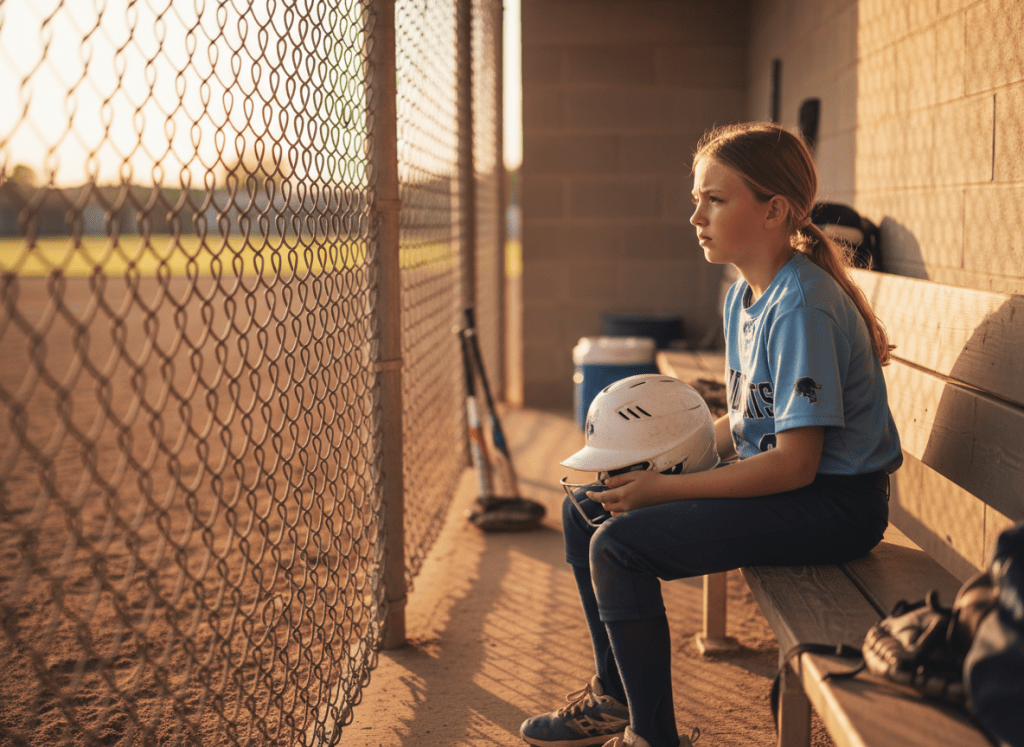
Why social-emotional learning belongs on the field, court, track, and in the dugout
There is a lot happening in youth sports that never shows up on the scoreboard.
A ten-year-old strikes out with runners on base and has to walk back to the dugout while everyone is watching.
A twelve-year-old realizes she is not in the starting lineup.
A middle school athlete hears a teammate whisper something that makes him wonder whether he really belongs.
A player makes the same mistake twice and looks toward the sideline before looking anywhere else.
A child who has been confident all season suddenly cannot get out of her own head.
And somewhere in the middle of all of that, there is a coach.
That is what Coach’s Corner is about.
Not plays.
Not batting averages.
Not how to build the perfect practice schedule.
This is about the part of coaching that happens between the plays.
It is about the enormous opportunity coaches have to help young athletes learn what to do with pressure, disappointment, frustration, friendship, confidence, mistakes, leadership, and all the other big feelings that show up when kids care deeply about something.
In other words, it is about the SEL side of sports.
Sports Give Kids a Place to Practice What We Keep Telling Them
We tell kids to be resilient.
Then they miss the shot.
We tell them not to compare themselves to other people.
Then the starting lineup gets posted.
We tell them to communicate.
Then they have to tell a teammate something uncomfortable.
We tell them mistakes are part of learning.
Then they make one in front of fifty people.
We tell them to advocate for themselves.
Then they have to decide whether they can actually walk up to an adult in charge and say:
“Coach, can I talk to you?”
That is what makes athletics such a powerful place for social-emotional growth.
The lessons are not hypothetical.
They are happening right now.
Upper Elementary Athletes Are Learning More Than the Game
Around ages eight through eleven, sports often become more serious.
Kids begin noticing who starts.
Who sits.
Who gets praised.
Who gets corrected.
Who seems naturally talented.
Who made the travel team.
And who did not.
They are also becoming much more aware of what other people think about them.
A mistake that an adult sees as one bad play can feel much bigger to a child.
They may not be thinking:
I missed the ball.
They may be thinking:
Everyone saw me miss the ball.
Or even:
Maybe I am not very good.
That distinction matters.
This is where coaches can begin teaching athletes to separate what happened from who they are.
You made an error. You are not an error.
You had a bad inning. You are not a bad player.
You were nervous. You can still be brave.
That is SEL.
Then Middle School Changes Everything
Middle school athletes are navigating even more.
Their bodies are changing.
Friend groups are shifting.
Competition increases.
Comparison increases.
Playing time suddenly feels more important.
Some kids develop quickly while others are still waiting for their bodies to catch up.
And sports can become tied very closely to identity.


Leave a Reply